The Physics of Cold EV Batteries
A technical deep dive into low-temperature battery electrochemistry, voltage collapse risks, BMS safety, and effects on electric vehicle range.
Winter temperatures are said to reduce an electric vehicle’s range and throttle its peak performance. But what really happens inside an EV when the temperature drops? This article dives into the physical properties of batteries in cold weather and explains how these properties dynamically change while driving.
Lithium-Ion Batteries
Modern electric vehicles rely on a variety of battery cell chemistries, depending on whether they prioritize energy density, performance, thermal stability, or cost. NMC and LFP are the most prominent examples.
All of these belong to the lithium-ion family and share the same core mechanism: They store and release energy by moving positive lithium ions ($\text{Li}^+$) back and forth between two electrodes (the anode and cathode) through a liquid electrolyte. The moving ions inside the cell force electrons to move through a circuit outside the cell, generating electrical current.
Sluggish Solid-State Diffusion
When a battery discharges, lithium ions leave the anode, travel through the liquid electrolyte, and enter the cathode’s host structure. These host structures are crystal lattices that serve as “shelves” the ions are sitting in. The movement of ions inside the solid lattice materials is known as solid-state diffusion.
To hop out of a crystal lattice, the ions need a certain level of thermal energy. The rate of this solid-state hopping drops exponentially as the temperature is falling. At sub-zero temperatures, the ambient thermal energy is too low and the ions will be trapped inside the crystal lattice. If you request electric current by stepping on the accelerator pedal, the ions won’t be able to escape the anode fast enough.
Electrolyte Viscosity
Even the few ions that overcome the activation energy barrier and hop out of the crystal lattice will hit a second bottleneck: Freezing temperatures cause the liquid electrolyte to thicken and become viscous. This drastically reduces ionic mobility, meaning that ions travel much slower and the internal resistance of the battery cell spikes.
Illustration only. Actual ion transport depends on cell chemistry, temperature, SoC, current, and the battery management system.
The Voltage Drop
Both the sluggish solid-state diffusion and the electrolyte thickening combine to a serious electrochemical effect. The usable voltage measured on the cell terminals is defined as:
$$ V_{\text{terminal}} = V_{\text{oc}} - I \cdot R_i $$$V_{\text{oc}}$ is the “Open Circuit Voltage” – the cell’s voltage when no current is flowing. $I$ is the electrical current the driver is demanding, and $R_i$ is the internal resistance.
With the increased internal resistance at low temperatures, drawing current by stepping on the accelerator will cause a voltage drop on the cell terminals. You could still use nearly 100% of the cell capacity if you kept the current $I$ microscopically low, but at EV power levels, the cell voltage will collapse immediately.
Allowing terminal voltage to drop risks catastrophic damage to the battery. If $V_{\text{terminal}}$ drops below a safety threshold (typically around $2.0\text{V}$), the anode’s copper foil starts to dissolve into the electrolyte. When recharging the EV, the copper forms sharp metallic needles. These so-called dendrites can pierce the separator between the electrodes and cause a short circuit, potentially setting the battery cell on fire.
Also, an EV requires a minimum operating voltage for safety. If this requirement isn’t met, the vehicle might perform an emergency shutdown.
Usable vs. Frozen Energy
To protect battery cells from permanent damage, the Battery Management System (BMS) deploys a software safety barrier.
It’s a common misconception that EV batteries lose physical capacity in winter. In reality, lithium ions in the anode don’t just disappear at low temperatures. The chemical inventory of ions, known as the State of Charge (SOC), remains unchanged. What does change is the usable electrical energy available under load, known as the State of Energy (SOE). An EV with 0% on its display has reached the zero-point of the SOE, not zero chemical SOC.
In normal conditions, low internal resistance allows you to extract nearly 100% of the chemical SOC before the cell hits the minimum voltage. At sub-zero temperatures, however, the BMS must prevent a voltage collapse through high resistance. It does this by shifting the zero-point of usable energy upward. It redefines the point of “0% usable energy” and locks away the remaining energy. As long as the battery is cold, this capacity stays inaccessible or “frozen”.
Illustration only. The actual relationship between temperature and capacity depends on cell chemistry, SoC, and the battery management system.
Unlocking Range by Defrosting
Frozen energy is never truly lost. As electric current passes through the cell’s internal resistance, it generates internal heat. The lost power that is dissipated as heat heavily depends on the electric current: $P_{\text{loss}} = I^2 \cdot R_i$.
Ironically, the higher the internal resistance in cold weather, the more heat the cell generates under load. This effect is further accelerated by the EV’s active thermal management system. With a rising temperature, internal resistance drops and the BMS can progressively “defrost” the frozen energy. The zero-point of usable energy is shifted back down toward true 0% chemical SOC.
From the driver’s perspective, this creates a phenomenon: While driving, the SOE stays consistent or even increases, despite consuming energy.
The Role of Heat Pumps
Relying solely on internal losses for self-heating is inefficient, as it consumes energy that could otherwise be used to power the drivetrain. This is why modern EV thermal management systems use active heat pumps to accelerate the “defrosting” process.
Heat pumps redirect the thermal waste generated by the drivetrain – including drive motors and power electronics – directly into the battery’s coolant loop.
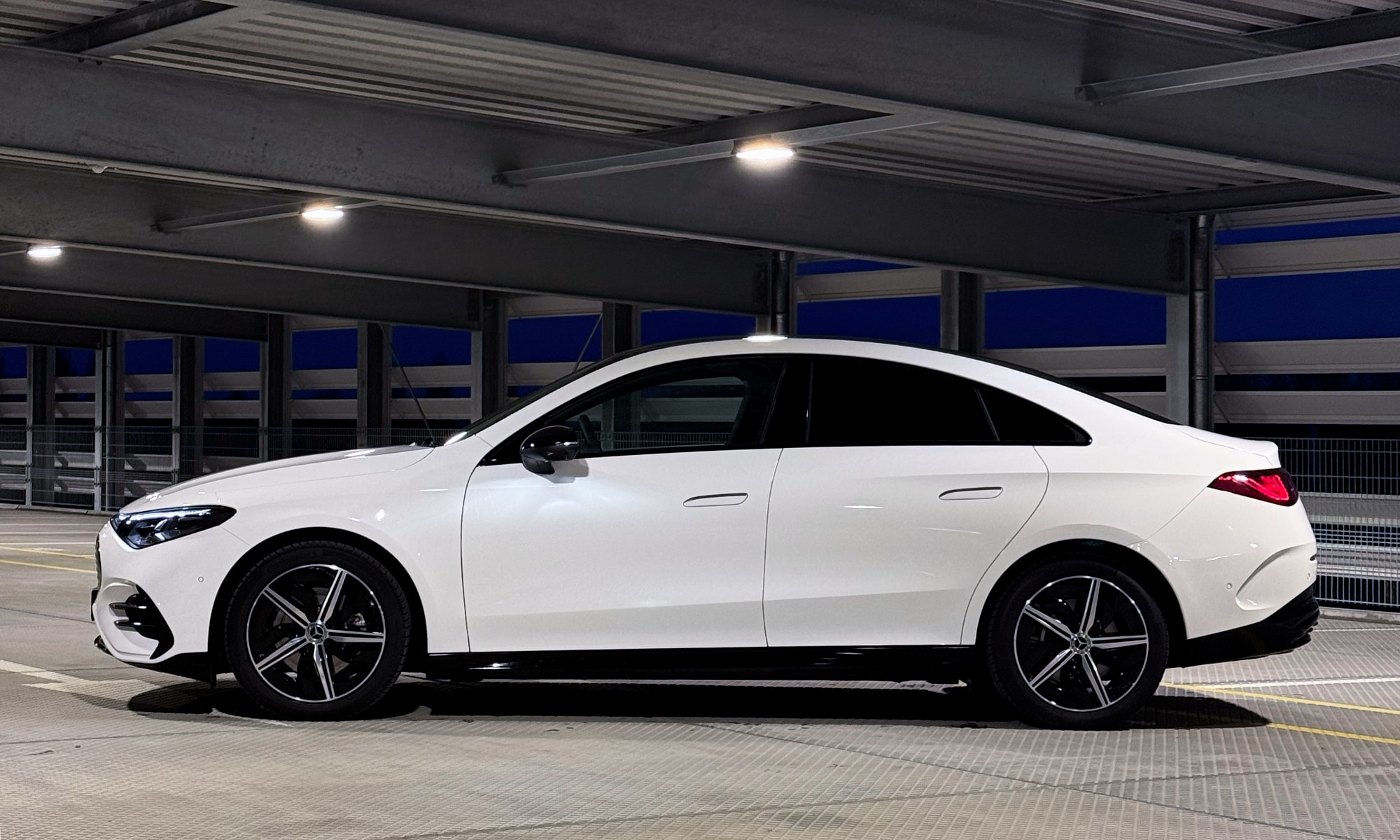
Many modern EVs use efficient heat pumps to speed up the release of frozen energy. Photo: Mercedes-Benz CLA 250+ electric
The most recent generation of heat pumps also uses waste heat from the battery itself, as well as even cold ambient air, to warm the battery faster. This active heating rapidly lowers the internal resistance in the battery cells, unlocking “frozen” energy and increasing the EV’s range early. Even in cold winters.